
Por Joshua Frank
 |
Port of Los Angeles, photograph by Joshua Frank |
It’s a balmy evening in San Pedro, California. I’m standing on the outskirts of a Little League ballpark atop a knoll, overlooking the arching Vincent St. Thomas Bridge. Below, a sea of shipping containers is stacked high like Lego blocks, forming mini-skyscrapers along the dusky horizon. Together, the Ports of LA and Long Beach handle 40% of all containerized imports into the United States. It’s a mammoth, sprawling complex spanning 24 square miles.
It’s also one of the largest sources of pollution in the LA area.
Cargo ships themselves emit a lot of emissions. A single container ship emits up to 5 metric tons of CO2 per hour while at port. Together, the Long Beach and LA ports handle an average of 40 ships per day. Port traffic and idling ships cause more than 2,400 deaths per year. In West Long Beach, which inhales the majority of the pollution emitted from the port, life expectancy is 8 years lower than in wealthier areas in LA County.
Thanks to the port’s operations and the ships and trucks it handles, this area is now known as the “diesel-death zone.”
The 20-mile-long 710 freeway, which serves as the main transport artery for the vast LA-Long Beach port complex. It’s a massive highway packed full of thundering semi-trucks nearly every hour of the day.
With their horns belching and tires screeching, the constant hum of big rigs can be heard for miles. This stretch of the 710 is one of the deadliest roads in the nation, according to the National Highway Traffic Safety Administration. A 2013 Vox report showed that only Interstate 285 in Georgia ranked higher. It makes perfect sense. I was recently told a gruesome tale from a grieving father who lost his son after his motorcycle was sucked under a semi-truck that was racing down the freeway at 70 mph. His bike was pulverized, and the 19-year-old kid died instantly.
 |
These horrific events occur all too frequently. Even large SUVs don’t stand a chance against a Mack truck pulling a 50,000-pound load. The remedy, at least the one proposed by the region’s judicious transportation authorities, is to widen the freeway to reduce traffic bottlenecks and accident risk. Much to the highway lobby’s chagrin, a $6 billion project to expand the 710 was shot down in May 2022 after 15 years of planning. Local advocates fought hard, rightly pointing out that poor communities of color would be most affected by the development.
“Though it took way too long to get a commitment to prioritize health and well-being, our community embraces this decision as a victory,” said Laura Cortez, co-director, East Yard Communities for Environmental Justice, a member of the 710 Task Force opposition. “However, the 710 as it is now causes significant harm daily, and community members along the 710 will continue to work so community voices are prioritized, and we don’t replicate the harms of the previous process.”
Nearly 1.2 million people live in neighborhoods that hug the hectic 710, 83% of whom are Black and Latinx, and the air they inhale is among the most toxic in the country. The air there is filthy. The EPA estimates the area accounts for nearly 20% of all particulate-laden diesel emissions in Southern California, and the toll on human health is insurmountable.
Living in a haze of diesel exhaust, as you might imagine, harms health, especially for children who are still developing. The pollution is visible nearly everywhere you look, caking the sides of buildings and covering cars with soot if they sit in one place long enough. The USC Environmental Health Center notes that people living in areas like the 710 corridor are more likely to experience premature births and have higher rates of heart disease, asthma, and lung cancer. While the greater Los Angeles area continues to rank among the worst air-quality regions in the country, hotspots in LA County consistently appear along the 710 freeway.
Trump’s tariffs haven’t slowed port traffic, mainly because importers have been scrambling to stock up on goods before prices rise. The ports recorded the second-highest level of imports in July, and August appears to be on a similar track. This means more ships and more truck traffic on the 710, and, ultimately, a hell of a lot more pollution.
This past week, the Port of Long Beach announced it had signed a deal to build a small modular nuclear reactor that would float on barges. The proposal is unlikely to go anywhere, as significant hurdles remain, and cost is only one of them. There’s a 1976 ban on nuclear energy construction in California, and while SMR technology isn’t new, putting one of these reactors on a floating platform in the middle of a busy port complex is novel, risky business.
I reached out to my friend and nuclear expert MV Ramana, who wrote the fantastic book Nuclear Is Not the Solution, to see what he made of the announcement that the port was looking at nuclear. He didn’t seem all that worried.
“There has been talk about SMRs, and nuclear reactors more generally, powering ships for decades. The Savannah, the first nuclear-powered ship, was launched back in 1959, and officials described it as ‘potentially the greatest revolution in maritime history,’ said Ramana. “But it quickly became apparent that it cost too much to operate, and the ship has been moved to storage in Baltimore harbor. Nuclear reactors, if anything, have become more expensive than in the 1950s.”
A far more reasonable solution to some of the port’s pollution is wind energy. The Port of Long Beach is planning to construct a large, 400-acre, $4.7 billion wind farm called Pier Wind that will produce 25 gigawatts of offshore wind energy by 2045, enough to electrify 25 million homes. But unlike the SMR plan, that energy isn’t being built to power port operations, it’s meant to feed the grid itself.
As for all the pollution the port is producing now, from those big ships to the dirty trucks, there’s nothing in the works that will radically reduce emissions any time soon (aside from a meager push to electrify trucking fleets). The poor folks near the port and along the 710 corridor will keep paying the price for an economy built to rely on cheap imports from faraway lands.
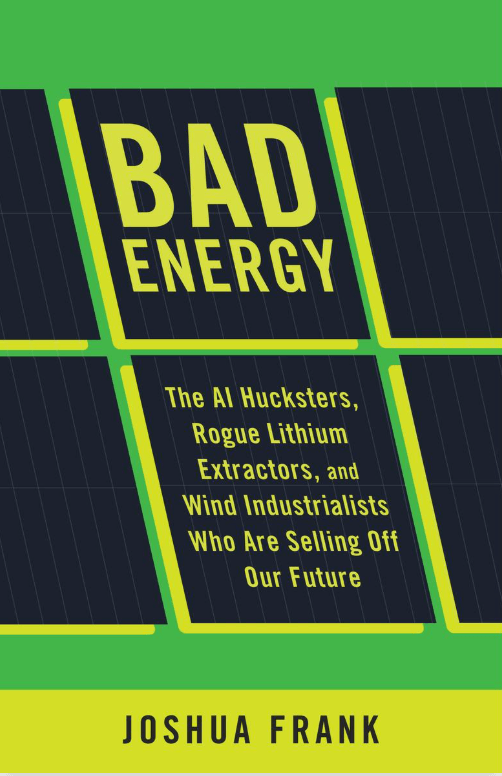
JOSHUA FRANK is co-editor of CounterPunch and co-host of CounterPunch Radio. He is the author of Atomic Days: The Untold Story of the Most Toxic Place in America, and the forthcoming, Bad Energy: The AI Hucksters, Rogue Lithium Extractors, and Wind Industrialists Who are Selling Off Our Future, both with Haymarket Books. He can be reached at joshua@counterpunch.org. You can troll him on Bluesky @joshuafrank.bsky.social
Nenhum comentário:
Postar um comentário