
Por Joshua Frank
 |
On January 17, 1966, a collision occurred during a routine refueling operation of a B-52 bomber over Spain’s Mediterranean coast. The Associated Press reported first on the incident, writing that a KC-135 tanker with jet fuel had collided in mid-air with a B-52.
“At least five of the eleven crewmen aboard the two planes died in the crashes,” wrote the AP. “They collided miles above the earth. School children walking to their classes heard the rending of metal, then watched as smoke clouds erupted from the big planes as they spiraled down, scattered burning wreckage over a wide area.”
 |
The startling reporting left out one important fact: when the KC-135 struck the B-52, four hydrogen bombs became dislodged and fell toward the unsuspecting countryside of Palomares. Had the weapons been armed, the result would have been unspeakably deadly. Nonetheless, each bomb was laced with plutonium. While the bombs themselves were not activated, other explosives on the aircraft detonated in the crash, causing the plutonium housed in the B-52’s warheads to scatter across Spanish homes and farmland below.
Had the AP news report of the accident included the tidbit about radioactive particles raining down on innocent Spaniards, there would have been an international uproar and a collective call for an abandonment of nuclear arms. But the initial communiqué from the Air Force was intentionally vague, if not overtly misleading:
A B-52 bomber from the 68th Bomb Wing at Seymour Johnson Air Force Base, North Carolina, and a KC- 135 tanker from the 910th air refueling squadron at Bergstrom Air Force Base, Texas, crashed today southwest of Cartagena, Spain, during scheduled air operations. There are reports of some survivors from the crews of the aircraft. An Air Force accident investigation team has been dispatched to the scene. Additional details will be available as the investigation progresses.
Later, the military reluctantly admitted the bombs had cracked and estimated that only a “small amount of basically harmless radiation” had been released. The United States was not about to reveal the gravity of its mistake. It was not uncommon throughout the Cold War for US aircraft to fly during all hours of the day, in all types of weather, with live, activated nuclear bombs attached to their bellies. In a way, it was a lucky break that the Palomares disaster was not a nuclear detonation. Yet plutonium is a tricky little element. A big dose will kill you on the spot, but in most cases, plutonium bioaccumulates, causing a host of problems down the road, like various forms of cancer. The more you are exposed, the more likely it is that plutonium will kill you later in life.
Such was the case for many of the Air Force personnel assigned to secretly clean up the Palomares collision. Many of the men who gathered soil and worked to remediate as best they could this wide swath of Spanish land had no special training or expertise to deal with such an event. As the New York Times reported:
“[The] response crew [was] made up of low-ranking airmen with no special training—cooks, grocery clerks, even musicians from an Air Force band—[who were rushed] to the scene. Wearing nothing more protective than cotton coveralls and sometimes a paper dust mask, they cut down contaminated crops, scooped up contaminated soil, and packed the material in 5,300 steel barrels that were shipped back to the United States to be buried in a secure nuclear waste storage site in South Carolina.”
Victor Skaar, a chief master sergeant, was one of the men who would suffer from the covert work he performed as a young airman in Spain in 1966. Nearly two decades later, while receiving a routine military physical in 1982, Skaar learned something alarming: his white blood cell count was totally out of whack. His body was fighting an invader. Skaar, at that very moment, speculated about what the culprit could be. Plutonium was invading his cells—plutonium he had breathed in while cleaning up Spanish soil in the 1960s.
“First they told me there were no records, which I knew was a lie because I helped make them,” he told The New York Times in 2019. “Then they told me I had been exposed, but the levels were so low that it didn’t matter.”
Now, in his late eighties, Skaar was fighting the very government he had once dutifully served. He was hoping for some recognition that the tasks the military assigned him when he was a young man were slowly killing him and some of his fellow servicemen.
Skaar’s fight was not unlike Vietnam vets requesting compensation from the federal government for their exposure to Agent Orange. His story was just another part of a much longer story about US troops being treated as disposable, whether they were dying on the battlefield or suffering quietly at home. In February of 2020, the Air Force doubled down, stating that the troops who had shoveled and removed plutonium debris in Palomares had not been exposed to any detectable amount of radiation. The government’s proof was scanty. Skaar’s lawyers had recently filed a lawsuit, which became a first of its kind, against the Department of Veterans Affairs for failing to acknowledge he and his fellow soldiers suffered radioactive exposure while on the job for the US government.
Skaar mailed letters to each of the men who served with him during the Palomares event to inform them that his suit had been accepted as a class action. The letters were often returned, a note attached when applicable: they were gone. Most were dead, and Skaar suspected that many had died from cancer, a result of the work they did while in the Air Force. With help from Yale Law School students, a federal appeals court heard Skaar’s case in September 2020. Their main complaint was that the Air Force’s method of collecting samples of potential radioactive exposure during the Palomares cleanup had not been scientifically sound. The Air Force contended that the urine samples they took in 1966 were enough to see whether or not the men were poisoned. Skaar, who was involved in the collection of these samples, knew they were not accurate.
“There was no time,” said Skaar. “We had to find all the bombs and do the cleanup—that took priority.”
An internal report by the Air Force—a report they have ignored—backs up Skaar’s claim that the testing was done haphazardly. This lapse in protocol became the backbone of the class action lawsuit.
“The VA has denied those veterans who are now elderly and facing a variety of health concerns benefits and has refused to recognize the conditions of their service for over fifty years,” Yale student Lily Halpern told the US Court of Appeals for Veterans Claims during the hearing, which was held remotely. “So while this case is about unsound science, it is also about remedying a grave injustice.”
The Department of Veterans Affairs countered that “adverse acute health effects were neither expected nor observed, and long-term risks for increased incidence of cancer to the bone, liver and lungs (the target organs for plutonium) were low.” They continued that “the Air Force Medical Service reconstructed the possible radiation doses for Veterans who participated in cleanup of the Palomares accident in 2013, using the highest measured doses obtained from biological monitoring at the time of the accident.”
It was nonsense, and on December 17, 2020, Skaar and his fellow servicemen were victorious. The court accepted their argument that the government’s methodology for measuring radiation exposure “ignored 98 percent of the radiation measurements taken from veterans after the incident.” The class action suit is now moving forward, but facing battles in court.
“Thanks to the Court’s decision and the continuing advocacy of Mr. Skaar and other class members, the VA must now justify its practice of arbitrarily dismissing the exceedingly high levels of radiation these veterans encountered and continue to suffer from … [and] fulfill its duty under law to assist these veterans and ensure their claims are evaluated using methods that are both scientifically and legally sound,” said John Rowan, Air Force veteran and national president of Vietnam Veterans of America.
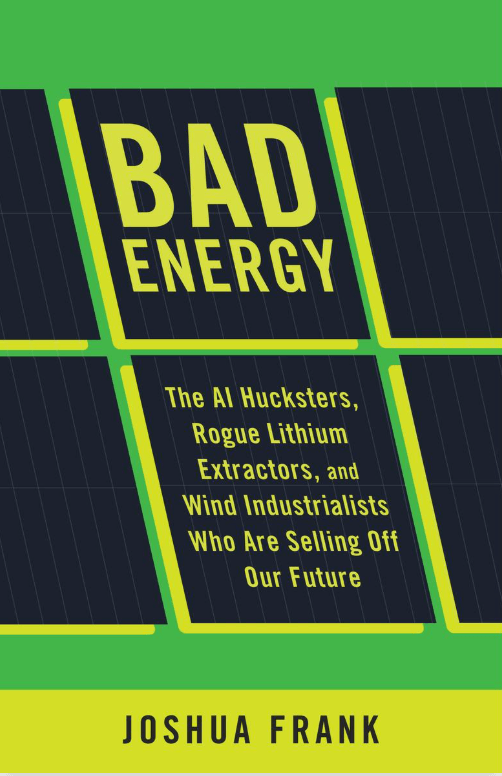
JOSHUA FRANK is co-editor of CounterPunch and co-host of CounterPunch Radio. He is the author of Atomic Days: The Untold Story of the Most Toxic Place in America, and the forthcoming, Bad Energy: The AI Hucksters, Rogue Lithium Extractors, and Wind Industrialists Who are Selling Off Our Future, both with Haymarket Books. He can be reached at joshua@counterpunch.org. You can troll him on Bluesky @joshuafrank.bsky.social
Nenhum comentário:
Postar um comentário