
Por Rory Bahadur
 |
| Image Miko Guziuk. |
That is the part we are trained not to see, because seeing it would make the flag feel less like a symbol of innocence and more like evidence requiring historical accounting. We tell ourselves the United States is democracy’s guardian, freedom’s defender, the country that protects the right of people to choose their own leaders. But in Guatemala, Honduras, El Salvador, Chile and elsewhere, the United States repeatedly undermined or helped destroy democratic movements when democracy threatened corporate profit, Cold War strategy or American dominance. (JUAN GONZALEZ, HARVEST OF EMPIRE 152-154 (2d ed. 2022)). Then, after helping make lawful life impossible in some of those places, we meet the survivors at the border with raids, detention centers, deportations and speeches about law and order.
That is not just a minor contradiction at the margins of American politics, but it is the great evasion in the immigration debate: we destroyed countries then criminalized many of the people fleeing the wreckage and taught ourselves to call that border security.
 Donald Trump made this evasion brutally plain when he reportedly referred to non-European nations as “shithole countries” while contrasting them with places like Norway. The insult was obscene, but the deeper obscenity was the historical amnesia underneath it. The phrase invited Americans to look down at broken places without asking who helped break them, to treat migrants as evidence of other nations’ failures rather than as witnesses to our own, and to convert poverty, violence and political collapse into proof that desperate people deserve exclusion instead of recognition.
Consider Guatemala. In 1954, the United States helped overthrow Jacobo Árbenz, a democratically elected president whose land reforms threatened the interests of the United Fruit Company. The CIA backed the coup. The government that followed unleashed decades of terror. Democracy was shattered, unions were suppressed, land was returned to corporate power and tens of thousands died. Generations later, when Guatemalans fled poverty, violence and political instability, Americans were told they were the problem.
Honduras tells a similar story. During the Cold War, the United States treated the country as a staging ground for anti-communist operations, poured military aid into the region, supported violent forces and tolerated or enabled regimes that kidnapped, tortured and killed in the name of fighting communism. Later, when Hondurans fled instability, corruption and violence, the United States did not say, “Some of this is the predictable result of our own imperial conduct.” It said, “Secure the border.”
El Salvador tells it even more brutally. During its civil war, the United States funded and trained forces responsible for extraordinary violence, including the U.S.-trained Atlacatl Battalion that carried out the El Mozote massacre, where civilians were tortured, raped and executed and children were killed. Yet when Salvadorans flee the consequences of that history, they are treated as trespassers rather than as human beings escaping a fire we helped light.
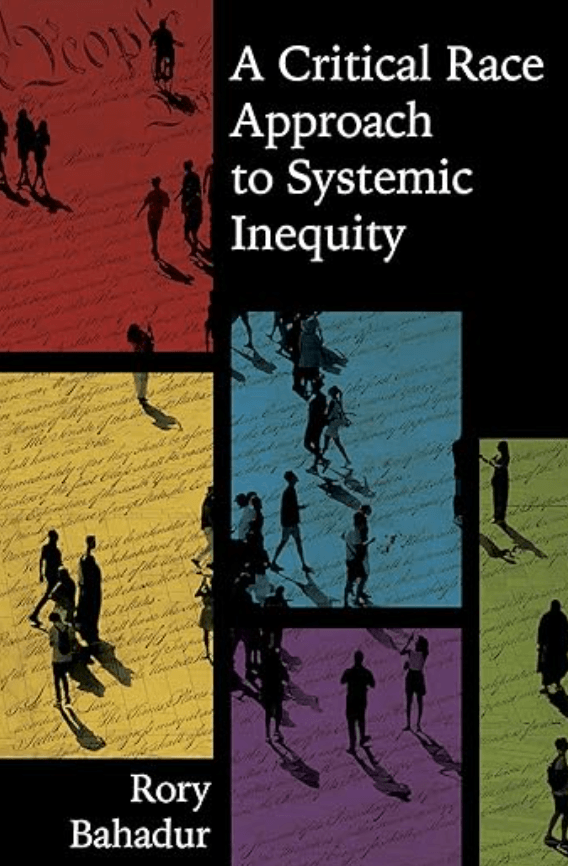
This is the buried truth of the immigration debate: many migrants are not coming from “failed” countries in some morally neutral sense. They are coming from countries that powerful nations, including the United States, helped fail. It is much easier to relegate that truth to the realm of irrelevance, not because we consciously choose denial, but because our minds reflexively protect the stories that make our world feel coherent, pushing aside the intolerable contradiction between America’s democratic self-image and its recurring willingness to undermine democracy abroad when power, profit or strategic advantage require it, and returning us instead to the comforting image of the flag as an unassailable symbol of democracy, freedom and national virtue. (RORY BAHADUR, A CRITICAL RACE APPROACH TO SYSTEMIC INEQUITY, 191-212 (2025)
That truth destroys the moral architecture of the border debate. If immigrants are criminals, invaders or parasites, then cruelty becomes defense. But if many immigrants are people fleeing instability we helped create, then cruelty becomes denial, historical laundering and the punishment of victims for surviving the consequences of our power.
That is why the myth of immigrant criminality matters so much. It does not merely mislead people; it performs moral work. It allows Americans to replace history with fear.
We see this most clearly in the fentanyl narrative. Politicians constantly imply that undocumented migrants are bringing fentanyl across the border and killing American children.
The claim is emotionally potent because it fuses parental terror, racial suspicion and national boundary-making into one story. But the data do not support the narrative. Fentanyl is overwhelmingly seized at legal ports of entry and interior checkpoints, not on illegal migration routes. U.S. citizens are heavily represented among convicted fentanyl traffickers. Border Patrol arrests of people crossing illegally almost never involve fentanyl possession.
Yet the lie survives because it feels right to people who have already been taught to associate brown migrants with danger. The immigrant becomes a container for everything Americans fear: drugs, crime, disorder, demographic change, economic insecurity and national decline. Once that association takes hold, facts become almost irrelevant because evidence does not merely fail to persuade. It feels like an attack on common sense.
The same thing happens with crime. Studies repeatedly show that undocumented immigration is not associated with increased crime, and some research suggests that undocumented immigrants commit crimes at lower rates than native-born citizens. But one horrific crime committed by an immigrant can become a national morality play in which the individual disappears into the category and immigration itself becomes criminal.
White Americans enjoy a privilege denied to migrants and racial outsiders: individuality. When a white man murders, bombs, shoots or terrorizes, he is usually treated as an individual failure, a loner, a troubled man, a monster, a mental-health case or an exception. His race does not become an indictment of the group. His citizenship does not become evidence that citizens are dangerous. No one says that because another white male has committed mass murder, we must close the suburbs. (RORY BAHADUR, A CRITICAL RACE APPROACH TO SYSTEMIC INEQUITY, 116-119 (2025)).
But when the perpetrator is an immigrant, Muslim, Black, Latino or otherwise outside the dominant national imagination, the crime becomes collective. The group is put on trial. The border becomes the solution. Deportation becomes justice. Exclusion becomes common sense. (RORY BAHADUR, A CRITICAL RACE APPROACH TO SYSTEMIC INEQUITY, 116-119 (2025)). The genius of anti-immigrant politics is that it converts American responsibility into American innocence. First, the United States helps destabilize countries through coups, military aid, corporate protection, anti-communist violence, economic pressure or selective indifference. Then, when people flee the resulting instability, American politicians describe their arrival as an invasion. The arsonist becomes the homeowner. The displaced become the threat. The powerful become the victims.
This is why “law and order” language is so morally deceptive in the immigration context. It begins the story at the border, as though the only relevant question is whether a person crossed legally. But history did not begin at the border. It began in boardrooms, embassies, plantations, military training facilities, covert operations and Cold War calculations, when American power decided that democracy in Latin America was acceptable only when it did not interfere with American interests.
To say this is not to claim that every migrant has a legal right to remain in the United States, to deny that governments have borders or to pretend that immigration systems require no rules. It is to insist that rules without history become instruments of moral evasion. A country cannot break societies and then treat the people fleeing those societies as though their suffering is self-created.
The cruelest thing about American immigration politics is not only that it lies about immigrants. It lies about America. It tells us we are merely defending ourselves from foreign disorder, when we have often exported disorder and then punished the people who tried to escape it. It tells us migrants are coming because they disrespect our laws, when many are coming because our power helped make lawful life impossible where they were born.
So perhaps the more honest question is not why people are coming here. It is what we did there.
And perhaps the most honest answer is that America did not merely discover broken countries. In too many places, it helped produce them, profited from them, militarized them, destabilized them, abandoned them and then criminalized the people who ran from the wreckage.
That is not border security. It is empire with a clean conscience.
Rory Bahadur is the author of A Critical Race Approach to Systemic Inequity and the James R. Ahrens Professor of Law at Washburn University School of Law but his views are his own and do not represent those of Washburn University.
Nenhum comentário:
Postar um comentário